This article says that the 2013-2014 Stanford Live season will feature dance, jazz, and much more.
***
After a season focusing on classical music, Stanford Live is planning a lineup with a broader range of dance, jazz, world-music and theater performances.
French choreographer Jerome Bel is planning a trio of pieces; musicians will bring the sounds of Portugal, Africa, Japan and Pakistan to campus; and musical-theater luminaries Patti LuPone and Mandy Patinkin will make an appearance.
Last season was dedicated to welcoming the new Bing Concert Hall as a fresh hub for classical music. Now, 2013-14 will continue to offer plenty of it. Strings start the season on Sept. 22, with violin great Itzhak Perlman hosting and conducting a concert of up-and-coming young string players from his Perlman Music Program.
Other classical musicians scheduled to perform this season include: the Estonian National Symphony on Nov. 2, the Takacs Quartet on Jan. 25 and 26, violinist Joshua Bell on Feb. 8, the Haifa Symphony Orchestra of Israel on March 16, and soprano Deborah Voigt on April 11. As in seasons past, the St. Lawrence String Quartet, the Philharmonia Baroque Orchestra and the choral group Chanticleer will give multiple concerts.
Opera will make an appearance as well. A free live simulcast of San Francisco Opera's production of "Falstaff" will be shown outdoors at the university's Frost Amphitheater on Oct. 11.
Nearly all the Stanford Live events, classical and otherwise, will be held at Bing, where the vineyard seating and theater-in-the-round feel provide an unusual venue for dance. Choreographer Bel will have three evenings to display his work there. On Nov. 13, in "The Show Must Go On," which the New York Times has called a "conversation with the issues of antivirtuosic movement and artifice," untrained dancers and Bay Area professionals alike will take the stage. Pop music and a D.J. will figure prominently.
Nov. 18 brings "Cedric Andrieux," a solo autobiographical piece with Bel himself; and on Dec. 2 Bel is paired onscreen in the "filmed dance dialogue" known as "Pichet Klunchun" with the classical Thai dancer of the same name. Bel will be present to answer questions after the film screening.
More dance comes on Jan. 31 with the Brazilian ballet troupe Grupo Corpo. The troupe will also perform a shortened family matinee on Feb. 1.
Several jazz musicians will also take the yellow-cedar stage at Bing. Early in the season, on Sept. 29, players will conjure up the spirit of New Orleans with the Preservation Hall Jazz Band, singer Ivan Neville, guitarist Leo Nocentelli and drummer Stanton Moore. More New Orleans-style jazz will follow on Oct. 27 with pianist Jonathan Batiste and his band Stay Human.
In world music, the Portuguese-African singer Mariza will perform an evening of Lisbon-style fado music on Nov. 1. Japanese sho player Ko Ishikawa joins cellist Maya Beiser and others in the world premiere of "Linked Verse," a Stanford commission from university composer Jaroslaw Kapuscinski, on Dec. 7. Asif Ali Khan takes the audience to Pakistan on April 1 with a night of Sufi soul.
World music is an annual affair at the "Harmony for Humanity" concert, which pays tribute to the late journalist and Stanford graduate Daniel Pearl. The free event is Oct. 9.
And no season would be complete without the ukulele. Jake Shimabukuro, whose ukulele playing went viral online a few years back, brings his strings to Bing on April 24.
On a different note, vaudevillian Tomas Kubinek will aim for laughs at the hall with two performances on May 4. The shows come on the heels of LuPone and Patinkin, longtime friends and Sondheim supporters, who will bring their Broadway chops to Bing on April 26. The LuPone-Patinkin pairing is a special event intended mainly for Bing members and sponsors, but Stanford Live promises that a few public tickets will also be available.
Overall, the season runs Sept. 22 through May 16. Subscriptions go on sale June 3, with single tickets on sale starting Sept. 7. For a complete schedule and ticketing information, go to live.stanford.edu or call 650-725-2787.
More pertinent updates about the jazz scene can be accessed through this Twitter page for Lou S Habash.
Monday, June 10, 2013

Tuesday, May 21, 2013
REPOST: Winner of 'Dancing With the Stars' is ...
I have an eye for talent, just like Kellie Pickler. Once an 'American Idol' contestant, Kellie is now the winner of the 16th season of ‘Dancing with the Stars’. This Today article provides details:
Hi. I’m Lou S. Habash, a dance teacher, and I love everything jazzy. Know more about dancing from my Facebook page.
It's over! Kellie
Pickler is the winner of the 16th season of "Dancing With the Stars."
The confetti rained down on the "American Idol" alum and
country-music star as she was awarded the coveted (though some might call it a
little tacky) mirror-ball trophy on Tuesday night. It's an honor she shares
with her pro partner, Derek Hough, who now has the distinction of being the
first ever four-time champ on the show.
"Oh my
God!" a clearly surprised Kellie exclaimed when her big win was announced.
"This is amazing."
It was an
"amazing" win that came without the aid of the usual online voting
via the official "Dancing" website, thanks to a technical glitch that
affected East Coast voters. (According to host Tom Bergeron, in the spirit of
fairness, none of the later votes cast on the site were counted either.
While Disney star
Zendaya (who came in second place for the season) was ahead of Kellie by one
point going into the finale, Kellie's victory didn't exactly come as a shock.
After all, viewers voted Kellie's emotion-packed contemporary freestyle -- the
clear showstopper performance from Monday night -- the dance they most wanted
to see again at the top of the show. Traditionally, the celebrity with the
winning freestyle takes the trophy too, a trend that proved true once again on
Tuesday night.
The results came
after Kellie and her fellow finalists, Zendaya and Ravens wide receiver Jacoby
Jones each performed one last dance, the dreaded "instant dance,"
wherein each of them learned the music they'd move to shortly before hitting
the floor. (Olympic gymnast and final four competitor Aly Raisman didn't
participate. She was cut just prior to the instant routines.)
Those last efforts
earned rave reviews from the panel and perfect scores for all, but in fairness
to Zendaya, her jive was a bit more "perfect" than Kellie's jive and
much more so than Jacoby's salsa.
It was Kellie who
earned the highest praise from the judges, though.
"I have to be
honest with you," Bruno Tonioli told her after the dance, "you remind
me of Julianne Hough."
Getting compared to
the one of the best dancers ever on the show (and the sister of her own pro
partner)? That almost counts as another win.
But those instant
efforts weren't the only performances during the two-hour season ender. As is
custom on finale night, many of the familiar faces who got the ballroom boot
earlier in the competition returned to show off their fancy footwork (such as
it is) too.
Reality TV star
Lisa Vanderpump impressed with the crowd as she took a spin, both with her
former partner Gleb Savchenko and with head judge Len Goodman. And
actor-comedian Andy Dick? He reminded fans how he went from underdog to beloved
ballroom beginner by delivering one last reason to cheer him on -- not so much
for the second take at his Mad Hatter jazz routine (although it was just as
entertaining as an encore), but for his willingness to poke fun at his own
weepy ways with a mountain of tissue.
There was another
returning hoofer hopeful to hit the floor too -- one who wasn't ousted from the
game at all, but rather voluntarily bowed out of the ballroom bash. Former
Olympic figure skater (and permanent America's sweetheart) Dorothy Hamill,
who's past injuries hindered her earlier efforts, joined returning
"Dancing" winner Kristi Yamaguchi in a beautiful synchronized
routine. During her brief ballroom stint, Dorothy credited Kristi as her
inspiration to join the show.
In an unfortunate
bit of irony, Dorothy's original partner, Tristan MacManus couldn't join her
due to his own injuries.
And that, plus a
hefty dose of traditional finale filler, was all there was from the last
Tuesday night results show of season -- and possibly ever. "Dancing With
the Stars" will return in the fall, but the Tuesday episodes won't.
Hi. I’m Lou S. Habash, a dance teacher, and I love everything jazzy. Know more about dancing from my Facebook page.
Sunday, April 21, 2013
Learning how musicians make money: The Artist Revenue Streams Project
With their expensive instruments, classy but tasteful fashion, and impeccable taste for expensive parties, it’s a wonder how musicians really make money. The Artist Revenue Streams Project is a multistage research project that was conducted specifically to find out how musicians and composers earn their keep.
 |
| Image Source: hypebot.com |
Why I think the project is a great idea
During the last decade, there have been drastic changes in the way music is created and distributed to the fans. Instead of vinyl records, cassette tapes, CDs, and minidiscs, digital is now the preferred form of distribution. Even radios and televisions are now becoming obsolete. I think that knowing how the shift to digital has affected musicians and composers revenue streams is important, as shifting to digital means reduced cost barriers to creation, distribution, and sale of music because of new technologies like music creation software, streaming services, and digital music stores.
 |
| Image Source: blog.wfmu.org |
How was the research conducted?
There are three parts to the research. In the first part, the researchers conducted interviews of a diverse set of musicians (around 80) to find out information about their revenue streams. The second part involved reviewing a set of two-year financial records (from 2010 to 2012) of some musicians who were interviewed during the first part of the research. Creating an online survey that asked relevant questions about artists’ revenue streams was the third part; more than 5,000 artists participated in the online survey.
 |
| Image Source: money.futureofmusic.org |
Many people may have thought that the shift to digital has been beneficial to musicians and composers; however, with the data acquired from this research, I think, this time, a more accurate picture can now be seen.
I’m Lou S. Habash, and I run a little dance studio called The Giddy Room in Berkshire, Massachusetts. Visit my Twitter page for a slice of my mind now and then.
Friday, March 15, 2013
REPOST: Matt Mattox, jazz dance pioneer, dies at 91
Legendary freestyle jazz dancer Matt Mattox dies at 91. This NewYork Times article provides details about his contributions to contemporary jazz dance.
Matt Mattox, a dancer, choreographer and teacher who helped shape contemporary jazz dance in the United States and Europe, died in France on Feb. 18. He was 91.
His death was confirmed by Bob Boross, a former student.
Mr. Mattox, who had made his home in France for many years, had a prominent career dancing in films and on Broadway in the 1940s and afterward. Though he was not as well known as some of the celebrated Hollywood dancers of his era, he was by all accounts every bit their peer.
“He was one of the greatest male dancers that ever was on a performing stage,” Jacques d’Amboise, the distinguished dancer and choreographer, said in a telephone interview. “He’s equal to Fred Astaire and Gene Kelly.”
As a dancer, Mr. Mattox was celebrated for his “ballpoint ease, pinpoint precision, and catlike agility,” as Dance magazine wrote in 2007. He was perhaps best known to moviegoers as the young, bearded Caleb Pontipee, one of the marriageable frontiersmen at the heart of the 1954 film“Seven Brides for Seven Brothers,” directed by Stanley Donen and choreographed by Michael Kidd.
In the movie, whose featured dancers also included Russ Tamblyn, Tommy Rall and Mr. d’Amboise, Mr. Mattox performs a dazzling series of leaps and splits above a sawhorse.
On Broadway, Mr. Mattox danced in “Once Upon a Mattress” (1959), in which he created the role of the Jester; and in the 1957 revival of “Brigadoon,” in which he played Harry Beaton.
Jazz dance entails far more than simply dancing to jazz: the genre has its own aesthetic traditions and its own kinetic vocabulary. Building on the work of his mentor, the prominent choreographer and teacher Jack Cole, Mr. Mattox is widely acknowledged as having been a primary shaper of those traditions in the mid-20th century and afterward.
Before that time, what passed for jazz dance was generally indistinguishable from garden-variety, high-energy Broadway hoofing. Mr. Mattox helped conceive a genre that was subtler, more rhythmically complex and far more eclectic, as well-suited for the concert hall as the theatrical stage.
Combining his own extensive training in ballet with tap dance, modern dance and folkloric dance traditions from around the world, he created a new, fluidly integrated art form he liked to call “freestyle dance.”
“That elegance of ballet was there, but still, the energy and the shape of the inner body was from jazz,” said Mr. Boross, an assistant professor of dance at Radford University in Virginia.
From the mid-1950s on, Mr. Mattox taught this personal brand of dance to generations of pupils, first in New York and later in Europe.
In both places, students from around the world flocked to study with him; over the years, they included the noted choreographer and theater director Graciela Daniele, and a young woman — about to sing an audition for her first Broadway show and anxious to learn a dance to go with it — named Barbra Streisand. (The show was “I Can Get It for You Wholesale,” and Ms. Streisand got the part.)
Harold Mattox, known as Matt, was born in 1921 in Tulsa, Okla., and moved with his family to Los Angeles when he was about 11. There, he began instruction in ballet, tap and ballroom dance, working with Mr. Cole and others. As a young man, he interrupted his studies for service as a fighter pilot with the Army Air Forces in World War II.
One of Mr. Mattox’s dance teachers, Nico Charisse, had a wife, Cyd, who was a pretty fair dancer herself, and through her connections Mr. Mattox got his start in movies, appearing in films including “Yolanda and the Thief” (1945), “Till the Clouds Roll By” (1946), “Guys and Dolls” (1955) and “Song of Norway” (1970).
On television, Mr. Mattox danced and choreographed for “The Bell Telephone Hour,” broadcast on NBC starting in 1959. He also choreographed the Broadway musical “Jennie,” starring Mary Martin, which opened in 1963; and a Metropolitan Opera “Aida” in 1959.
In the early 1970s, Mr. Mattox moved to London, where he started his own dance company, JazzArt, taking it with him when he moved to Paris in the mid-’70s. Since the early 1980s, he had lived in Perpignan, in the South of France.
Mr. Mattox was married several times. His survivors include his wife, Martine Limeul Mattox; three sons, Matthew, Christopher and Timothy; and grandchildren. Information on other survivors could not be confirmed.
In an interview with Dance magazine in 2003, Mr. Mattox explained the genesis, at midcentury, of his singular style:
“I went home, I sat down, and I drew one line on a blank piece of paper,” he said. “The body is a straight line and you can do everything with it. Then, there was a Life magazine photographer who was experimenting in the early 1950s by shooting a man holding two lamps, which he moved against a black background. When the photo was developed, all you saw were these curving lines of light. And I thought, ‘That’s the way the body should move.’ ”
Lou S. Habash is a dancer and a self improvement instructor focusing on jazz dance. Do you want to learn this type of dance? Visit this site.
 |
| Image Source: nytimes.com |
His death was confirmed by Bob Boross, a former student.
Mr. Mattox, who had made his home in France for many years, had a prominent career dancing in films and on Broadway in the 1940s and afterward. Though he was not as well known as some of the celebrated Hollywood dancers of his era, he was by all accounts every bit their peer.
“He was one of the greatest male dancers that ever was on a performing stage,” Jacques d’Amboise, the distinguished dancer and choreographer, said in a telephone interview. “He’s equal to Fred Astaire and Gene Kelly.”
As a dancer, Mr. Mattox was celebrated for his “ballpoint ease, pinpoint precision, and catlike agility,” as Dance magazine wrote in 2007. He was perhaps best known to moviegoers as the young, bearded Caleb Pontipee, one of the marriageable frontiersmen at the heart of the 1954 film“Seven Brides for Seven Brothers,” directed by Stanley Donen and choreographed by Michael Kidd.
In the movie, whose featured dancers also included Russ Tamblyn, Tommy Rall and Mr. d’Amboise, Mr. Mattox performs a dazzling series of leaps and splits above a sawhorse.
On Broadway, Mr. Mattox danced in “Once Upon a Mattress” (1959), in which he created the role of the Jester; and in the 1957 revival of “Brigadoon,” in which he played Harry Beaton.
Jazz dance entails far more than simply dancing to jazz: the genre has its own aesthetic traditions and its own kinetic vocabulary. Building on the work of his mentor, the prominent choreographer and teacher Jack Cole, Mr. Mattox is widely acknowledged as having been a primary shaper of those traditions in the mid-20th century and afterward.
Before that time, what passed for jazz dance was generally indistinguishable from garden-variety, high-energy Broadway hoofing. Mr. Mattox helped conceive a genre that was subtler, more rhythmically complex and far more eclectic, as well-suited for the concert hall as the theatrical stage.
Combining his own extensive training in ballet with tap dance, modern dance and folkloric dance traditions from around the world, he created a new, fluidly integrated art form he liked to call “freestyle dance.”
“That elegance of ballet was there, but still, the energy and the shape of the inner body was from jazz,” said Mr. Boross, an assistant professor of dance at Radford University in Virginia.
From the mid-1950s on, Mr. Mattox taught this personal brand of dance to generations of pupils, first in New York and later in Europe.
In both places, students from around the world flocked to study with him; over the years, they included the noted choreographer and theater director Graciela Daniele, and a young woman — about to sing an audition for her first Broadway show and anxious to learn a dance to go with it — named Barbra Streisand. (The show was “I Can Get It for You Wholesale,” and Ms. Streisand got the part.)
Harold Mattox, known as Matt, was born in 1921 in Tulsa, Okla., and moved with his family to Los Angeles when he was about 11. There, he began instruction in ballet, tap and ballroom dance, working with Mr. Cole and others. As a young man, he interrupted his studies for service as a fighter pilot with the Army Air Forces in World War II.
One of Mr. Mattox’s dance teachers, Nico Charisse, had a wife, Cyd, who was a pretty fair dancer herself, and through her connections Mr. Mattox got his start in movies, appearing in films including “Yolanda and the Thief” (1945), “Till the Clouds Roll By” (1946), “Guys and Dolls” (1955) and “Song of Norway” (1970).
On television, Mr. Mattox danced and choreographed for “The Bell Telephone Hour,” broadcast on NBC starting in 1959. He also choreographed the Broadway musical “Jennie,” starring Mary Martin, which opened in 1963; and a Metropolitan Opera “Aida” in 1959.
In the early 1970s, Mr. Mattox moved to London, where he started his own dance company, JazzArt, taking it with him when he moved to Paris in the mid-’70s. Since the early 1980s, he had lived in Perpignan, in the South of France.
Mr. Mattox was married several times. His survivors include his wife, Martine Limeul Mattox; three sons, Matthew, Christopher and Timothy; and grandchildren. Information on other survivors could not be confirmed.
In an interview with Dance magazine in 2003, Mr. Mattox explained the genesis, at midcentury, of his singular style:
“I went home, I sat down, and I drew one line on a blank piece of paper,” he said. “The body is a straight line and you can do everything with it. Then, there was a Life magazine photographer who was experimenting in the early 1950s by shooting a man holding two lamps, which he moved against a black background. When the photo was developed, all you saw were these curving lines of light. And I thought, ‘That’s the way the body should move.’ ”
Lou S. Habash is a dancer and a self improvement instructor focusing on jazz dance. Do you want to learn this type of dance? Visit this site.
Wednesday, February 13, 2013
Icons of the bebop
 |
| Image Source: Tumblr.com |
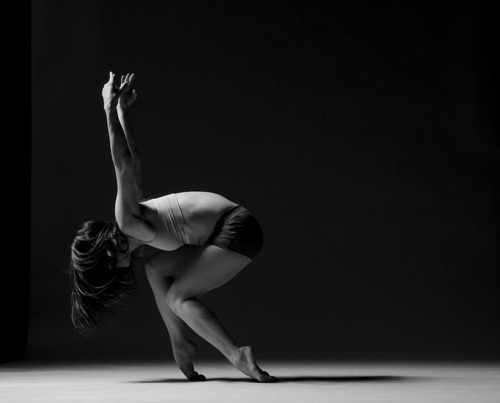
Lou S. Habash the dancer wouldn’t be who she is today without the influence of modern jazz dancers who have defined the art of the genre as it is known today. My idols, Jack Cole, Katherine Dunham, and Twyla Tharp, are some of the most famous jazz dancers whose techniques and performances made an impact not just on me, but also on the entire world of jazz. Here are the reasons why they stood out:
 |
| Image Source: Blogspot.com |

The man was not called the Father of Jazz Dance Technique and the Father of Theater Dance for nothing. During the Great Depression, he was the first dancer to mix popular jazz moves with modern and ethnic dance styles, which resulted to a unique technical jazz dance that he himself formalized. It was a style that was full of emotion, movements, and animalistic appeal. He worked with the iconic Hollywood actress Marilyn Monroe when he choreographed “Diamonds are a Girl’s Best Friend.”
 |
| Image Source: NYTimes.com |

A proponent of black dance in her time, Katherine Dunham established the black modern dance company Negro Dance Group. Her style was a fusion of Cuban, Haitian, Brazilian, and Caribbean rhythms that resulted into a polyrhythmic strategy. She also made popular the technique called body isolationism.
 |
| Image Source: VoiceofDance.com |

"I had to become the greatest choreographer of my time. That was my mission, and that's what I set out to do."
Influenced by a musical family, Tharp had formal dance training in college. At 23, she studied ballet at the American Ballet Theater in New York and eventually founded her company, the Twyla Tharp Dance. She created a dance style that’s not only humorous, but edgy as well, breaking the norm of seriousness and spirituality of what modern dance was then.
My Twitter account offers more information on jazz dancing.
Tuesday, February 12, 2013
Dancing to the rhythm of the blues
 |
| Image Source: SydneyDanceCompany.com |

Since its debut in the city of New Orleans in the turn of the 20th century, jazz music has been touted by many as the only true American art form.
Unlike other music genres, jazz music does not conform to a single tune; it’s more of an idea that develops in the mind and is unleashed through the instruments to create a sound that comes from the soul of the musician.
Jazz music has such a powerful influence that it has branched out into another field of art -- dance.
The earliest record of jazz dancing dates back to the 1800s, in the streets of New Orleans. At this point in history, African Americans were still enslaved under the Spanish and French rule. The upper class Catholic citizens of the city permitted the African slaves to dance in the Congo square, in accordance to the black code which entitles the African slaves a short respite from work.
 |
| Image Source: Nola.com |

The upper class Catholic society thought that by giving the slaves the pleasure of dancing, they will become more compliant at work. This gathering also served as a way to monitor propaganda or voodoo dances which they might perform.
This event however inspired many white Americans to imitate the dance steps of the slaves, and from there, jazz dancing was born.
 |
| Image Source: TimeInc.net |

So what is jazz dance?
Jazz dancing is essentially a type of dance that showcases the dancer’s original style. It is not based on technicality like most ballroom dancing styles. Rather, it relies on the dancer’s ability to execute an idea which he or she wants to impart.
Jazz dancing is steadily gaining popularity for it is a style most contemporary artists are drawn to. It is so well loved that it is one of the most anticipated dance categories in the hit television show So you think you can dance.
 |
| Image Source: TVGuide.com |

Jazz dancing is a delightful spectacle to watch as each performance not only shows the dancer’s soul, but also showcases the art form’s rich history.
A jazz music and dance lover herself, Lou S. Habash gravitates towards jazz music because it allows her more freedom of expression than any other kind of music. Connect with her by following her on Twitter.
Subscribe to:
Posts (Atom)